
Main Article
Museum props play an important role in turning information into something visitors can see, understand and, in some cases, actually hold in their hands. From historical replicas and reproduction artefacts to immersive exhibition pieces, museum props can be created for many reasons. For example, if the original object is too rare, valuable or fragile to use. Or when it simply no longer exists.
But how are museum props made, and what makes a convincing museum replica?
At Spur Creative, we make bespoke props, replicas and artefacts for museums, exhibitions and visitor experiences. The answer usually starts with understanding not only what an object needs to look like, but how it will be used.
What are museum props?

Museum props are specially made objects used within exhibitions, displays, educational activities and visitor experiences.
They can include replica historical artefacts, handling props, models, reproduction documents, recreated objects and interactive pieces.
Some need to be extremely close reproductions of an original. Others are designed to communicate the appearance and story of an object while being lighter, stronger or safer to handle than the real thing.
This is why museum prop making often combines visual accuracy with practical design.
Why do museums use replica props?

There are plenty of occasions when displaying or handling an original artefact isn't practical.
It may be too fragile, rare or valuable. Multiple versions of an object might be needed. A collection may also be designed to travel to schools or other venues, where robust replicas make much more sense than original artefacts.
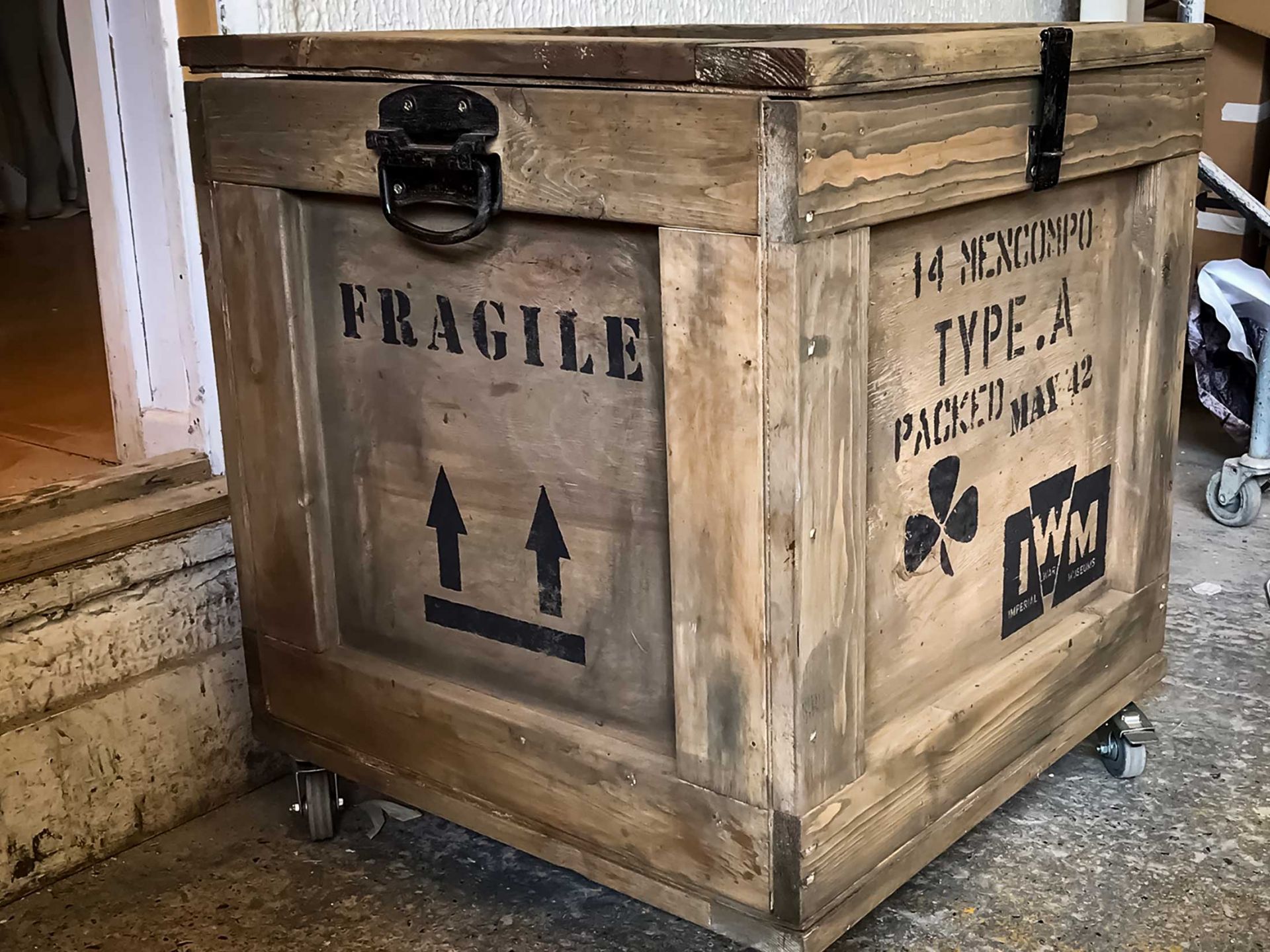
A good example is our work for Imperial War Museum North, which commissioned us to design and create six loan boxes for use with schools, young people and communities.
The boxes contained replica objects relating to life during the First and Second World Wars. This gave people the opportunity to explore the subject through physical objects rather than interpretation alone.
How are museum replicas made?

There is no single way to make a museum replica.
Depending on the object, we might use sculpting, moulding and casting, resin, fibreglass, carpentry, metalwork, model making, scenic painting or specialist finishing. Often, several processes are combined within the same project.
For the Imperial War Museum project, for example, we sculpted, moulded and cast replica factory workers' goggles in resin. We recreated wartime documents and cards, produced replica kit bags and made numerous other objects for the collection.

One of the more unusual challenges was replica food. To create a mashed potato pudding, we first piped real mashed potato into a bowl to create the required shape. From that, we were able to mould and cast replicas in foam.
It demonstrates something important about replica prop making: the material a replica is made from doesn't necessarily need to be the material it appears to be made from.
The right material is the one that achieves the required appearance while also providing the appropriate weight, strength and durability.
What makes a convincing museum prop?

Small details can make a significant difference. Real historical objects are rarely pristine. They acquire scratches, fading, discolouration, dents, worn edges and other signs of use.
Scenic painting and specialist finishing can therefore be just as important as the construction itself. Sometimes the final stage of making a convincing new prop is making it look convincingly old.
The intended viewing distance matters too. An object displayed behind glass has different requirements from something visitors will examine closely or hold in their hands.
Can museum props be handled?

Yes. Museum props can be specifically designed as handling replicas.
When an object will be regularly picked up, transported or used by school groups and visitors, durability becomes a particularly important part of the design.
Weight, materials, construction and finish all need to be considered alongside appearance.
The Imperial War Museum loan boxes are a good example. These weren't simply objects created for a static display. They formed part of an offsite educational resource and therefore had to work in a very different environment from precious originals kept safely inside museum cases.
Museum props don't always have to be historical

Museum prop making isn't limited to reproducing real historical artefacts.
For Games Workshop, we created full-size objects from the Warhammer universe for its head office and museum, including a Warhammer, Orc sword, axe, Book of Grudges and Dwarf King's Throne of Power.

Bringing fictional objects into the physical world required many of the same prop-making disciplines.
We used techniques including wood carving, clay sculpting, moulding and fibreglass casting, upholstery and detailed paint finishing. The Book of Grudges combined paper and leather with cast pewter details to create the appearance of an authentic old-world book.
Whether the source is historical or fictional, the challenge is similar: turning reference material into a believable three-dimensional object.
Can a prop maker reproduce an existing artefact?

Museum replica props can be created using an original object, photographs, drawings, dimensions, archive material or other visual references.
How closely something needs to be reproduced depends on its purpose.
A replica intended for close inspection may require very fine details, textures and finishes, while another object might be primarily intended to communicate its shape, scale or function.
Understanding that purpose at the beginning helps determine the most appropriate materials and prop-making processes. Sometimes the challenge is reproducing an object accurately. Sometimes it's making a replica robust enough to be handled hundreds of times.
And sometimes it's working out how to make mashed potato that never goes off.
Commissioning museum props and replicas

If you're planning a museum or exhibition project, it's useful to provide your prop maker with as much information as possible about the object and how it will be used.
Reference photographs, dimensions, quantities and deadlines are a good starting point. But it's equally important to know whether visitors will handle the object, how it will be displayed and whether it needs to travel between locations.
If you're planning a museum exhibition, visitor experience or educational display, we'd love to help bring your ideas to life.